Swim to Survive
A free 8-week swimming program for Black and racialized individuals and families in Waterloo Region — building life-saving water safety skills, confidence, and access to aquatic spaces.
Applications for the 2026 program are now open!
Program Impact (2023-2025)
511
participants served since launch
96 → 178 → 237
participants in 2023, 2024, and 2025
62%
year-over-year growth in participation
250+
individuals currently on the waitlist
About the Program
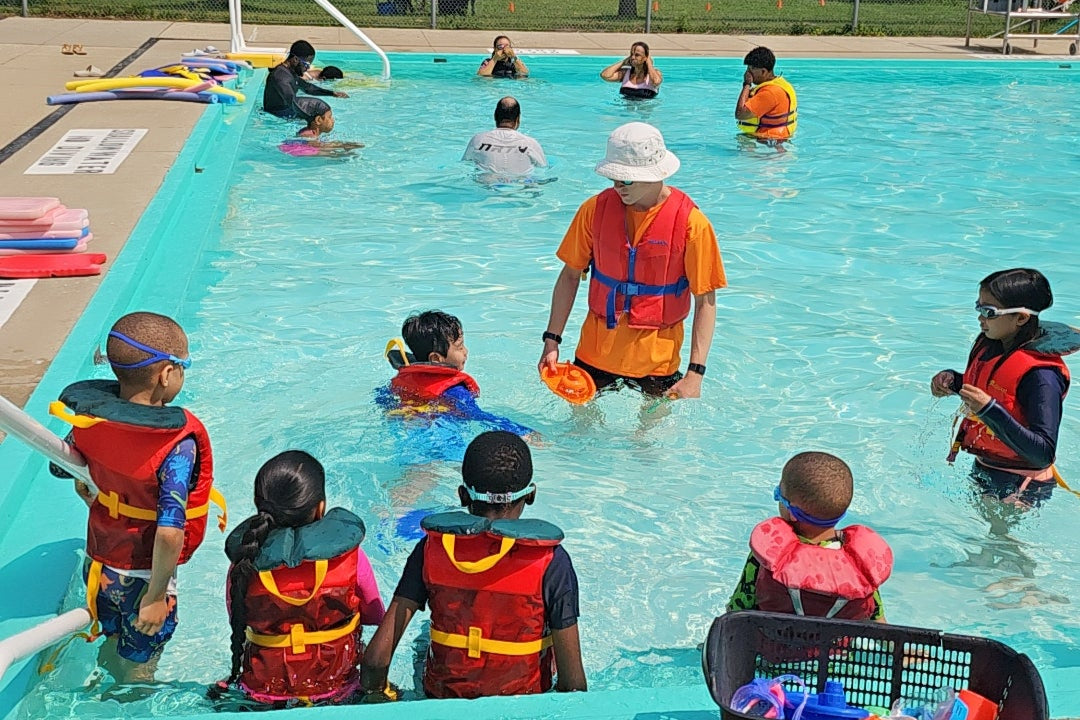
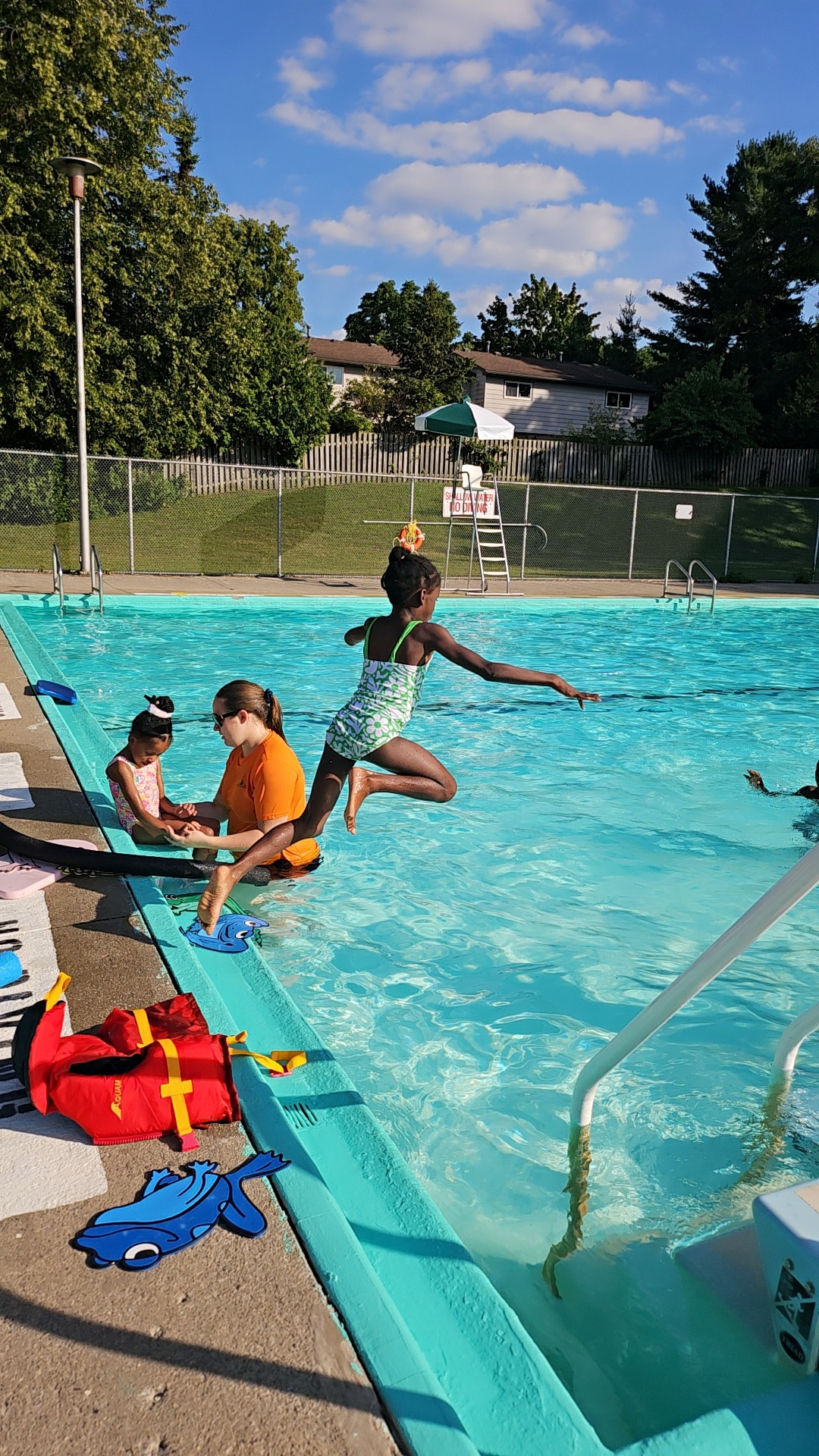
Launched in 2023, our 8-week Swim to Survive program teaches three essential survival skills — ROLL into deep water, TREAD water for one minute, and SWIM 50 metres — following the Lifesaving Society’s nationally recognized standards.
The program includes:
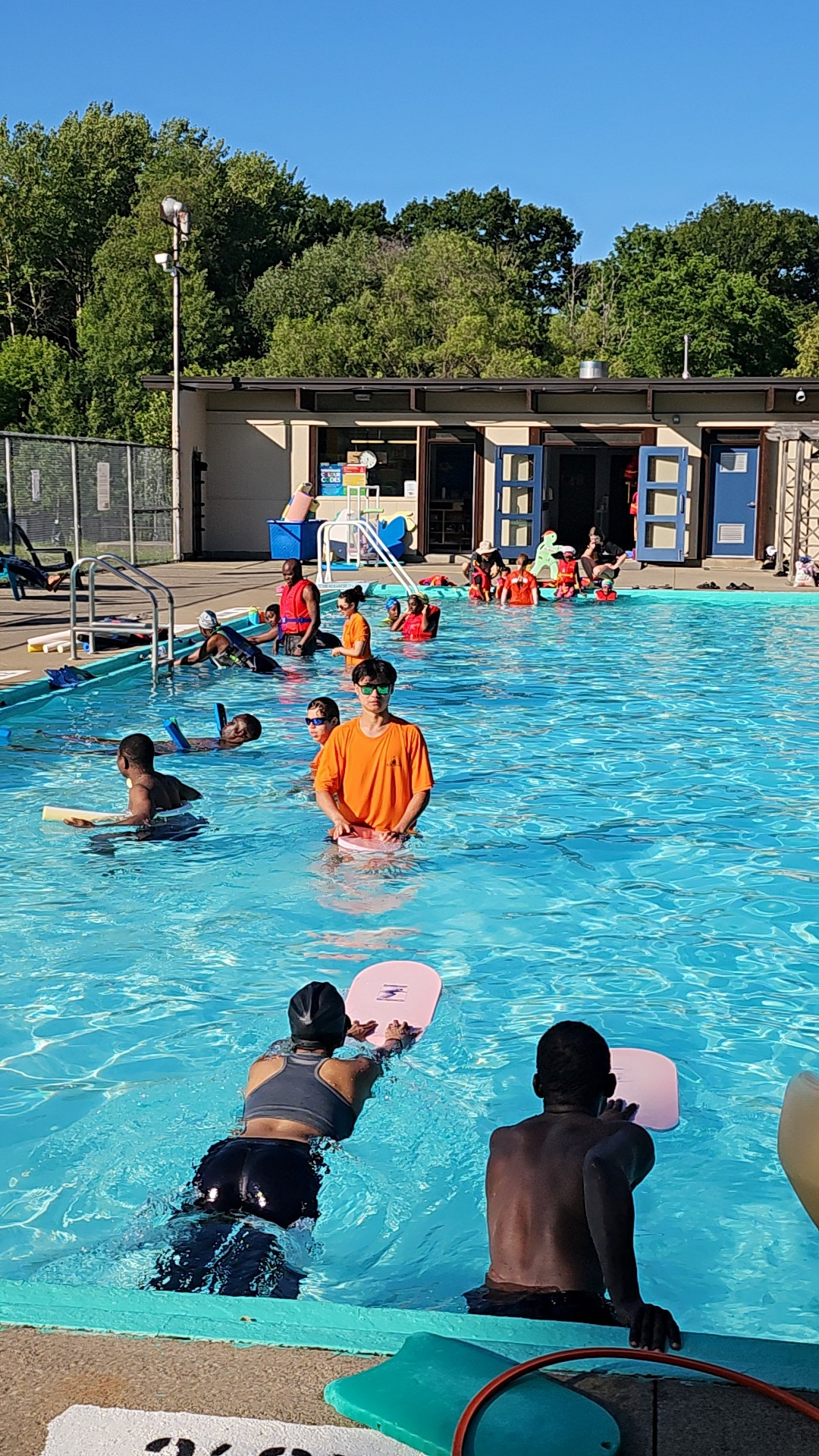
- Free 8-week water safety instruction for ages 4 to 60, no experience needed
- Indoor and outdoor pools in the Kitchener-Waterloo-Cambridge region
- Different class types: kids-only, women-only, and all-ages so families can participate together
- Dedicated lifeguards and coordinators ensuring safety and high-quality instruction
- Participants receive progress reports and can level up as skills improve
Program Details
Duration: 8 weeks (July – August)
Location: Pools across Kitchener, Waterloo, and Cambridge
Cost: Free (fully subsidized)
Eligibility: Black and racialized children, youth, and adults (ages 5+
Experience: None required
What Participants Gain
- Life-saving water survival skills
- Increased confidence in aquatic environments
- Reduced fear of water
- Pathways to advanced swim levels and lifeguard training
Why This Program Matters
Drowning is preventable — but access to swim education is not equal.
- Drowning is a leading cause of unintentional death among children in Canada
- Newcomer children are 4x more likely to be unable to swim
This program helps address those inequities by:
- Removing financial barriers entirely through free programming
- Providing culturally responsive and inclusive learning environments
- Creating dedicated safe spaces for women and families
- Building life-saving skills that protect entire communities
FAQs
A water safety initiative teaching basic survival swimming skills to Black and racialized children and adults — equipping them with the abilities needed to survive an unexpected fall into water.
The program is open to all Black and racialized men, women, and children aged 5 and older in the Waterloo Region.
The program is entirely free for participants.
Three critical survival skills: rolling into deep water, treading water for one minute, and swimming 50 metres.
No. The program is designed for beginners and individuals with varying levels of comfort in the water.
8 weeks, running in July and August.
Trained instructors certified in water safety and swimming education.
This class is suited for individuals who are already at ease in the water and looking to strengthen their basic swimming abilities. It’s intended for those who can comfortably float, glide, and submerge their face. In this level, participants will:
- Practice entering and swimming in deeper areas
- Learn how to safely fall sideways into the water with a lifejacket and recover
- Stay afloat without the help of flotation devices
- Develop and improve their whip kick for breaststroke
- Swim 10 metres continuously on both their front and back
- Start flutter kick interval training to enhance stamina and technique
By the end of the course, swimmers will gain greater confidence in deeper water and be ready to move on to more advanced stroke techniques.
Instructors closely supervise all participants. Sessions take place in controlled pool environments, and appropriate safety equipment including life jackets is provided as needed.
Yes — women-only sessions are held at an indoor facility with limited public viewing.
No. Children can participate independently with parental or guardian consent.
Support Life-Saving Access to Swimming
This program is not just about swimming — it's about safety, equity, and saving lives.
Your donation helps us reduce the waitlist, expand to year-round programming, and reach more Black and racialized families across the region.
Our Financial Partners